Back to Services
Fire Risk Assessments
Fire Alarm Systems & Maintenance — Professional & Compliant
Protecting life, property and business continuity starts with reliable fire detection. A professionally designed and maintained fire alarm system is one of the most essential components of a building’s fire safety strategy. It provides early warning of fire, enables safe evacuation, supports compliance with UK fire safety law, and is often required by insurers and regulators.
What Fire Alarm Systems Do
Fire alarm systems detect and alert occupants to the presence of fire or smoke so that people can evacuate safely and emergency services can respond quickly. Systems can include a range of technologies — from manual call points and automatic smoke or heat detectors to advanced aspirating smoke detection and optical beam systems, depending on the building’s size, layout and risk profile.
Why Fire Alarms Are Required
Under the Regulatory Reform (Fire Safety) Order 2005, most commercial and public buildings must have appropriate fire detection systems in place as part of a fire risk assessment and overall fire safety strategy. This means selecting the right type of system and ensuring it is regularly serviced, tested and maintained to remain effective.
Types of Fire Alarm Systems
We offer and support a full range of system types to suit different building requirements:
M (Manual) Systems – basic systems where occupants manually trigger alarms.
L-Category Life Safety Systems – from L5 (custom coverage) through L1 (full building coverage) designed to protect occupants and escape routes.
P-Category Property Protection Systems – focused on early detection to reduce damage and business disruption.
Testing, Maintenance & Legal Compliance
To be compliant with UK standards and maintain reliable performance:
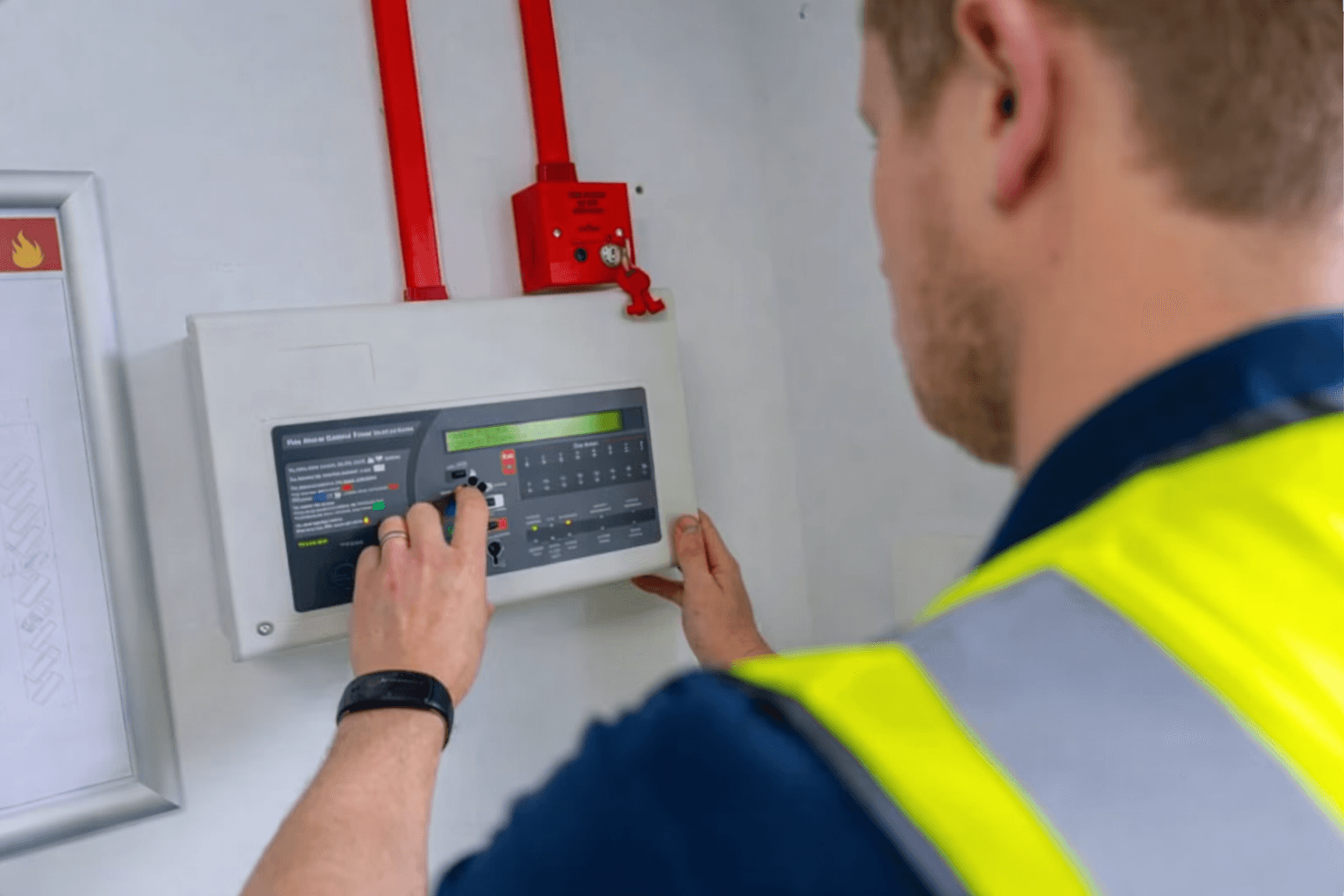
Fire alarm systems should be inspected and serviced regularly by a competent engineer — at least every six months as recommended by British Standards and UK guidance.
Weekly user testing by responsible persons on site helps identify faults quickly and demonstrate ongoing vigilance.
All inspections and tests should be recorded in logs and reports, providing evidence of compliance and a clear maintenance history.
When maintained correctly, systems are more likely to work when needed — protecting people, reducing false alarms, and supporting insurance and regulatory requirements.
Why Choose Us
We not only design and install high-quality fire alarm systems tailored to your building and risk profile, but we also provide ongoing servicing, maintenance, monitoring and comprehensive support throughout the lifecycle of your system.